
Why reusable diapers
Are you torn between cloth diapers and disposable diapers?
Cloth diapers/reusable nappies have come a long way. They are trendy, eco-friendly, cheap and not at all the (dirty) work that people expect. More and more people nowadays choose reusable diapers over disposable diapers . You can read below about the most important advantages
8 benefits of reusable diapers
1. Cloth diapers are more leak-proof than disposable diapers.
Cloth diapers come in many shapes and sizes. Contrary to popular belief, good cloth diapers have fewer leaks than disposable diapers. Cloth diapers can always be adjusted to the absorbency you need. A child who pees little can wear a thin diaper; if a child pees a bit more, you can easily add an extra layer. For naps and nights, there are special night diapers that have incredibly good absorbency and can even be adjusted to provide even more absorbency. Does your child constantly wet the bed with disposable diapers, and have you tried everything already? Then give a cloth night diaper a try.
2. Smaller chance of blow-outs
Cloth diapers have good elastic at the back and legs, and sometimes even on the belly. These elastics make a world of difference compared to the disposable elastics in disposable diapers. Thanks to these elastics, cloth diapers fit snugly, and poop practically always stays inside the diaper. Blowouts rarely occur with cloth diapers. That saves a tremendous amount of washing, baths, and frustration!
3. Skin-Friendly
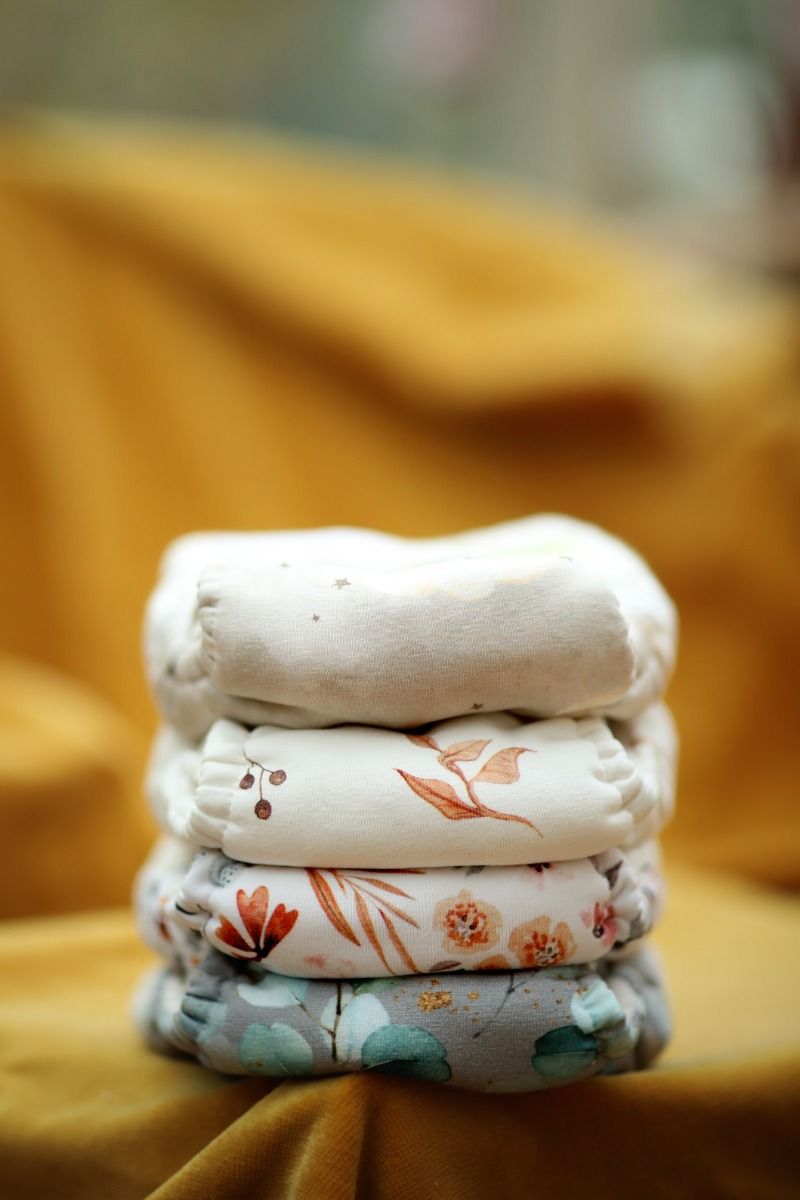
In 2019, a large-scale study into the ingredients of disposable diapers found various toxic and carcinogenic substances in disposable diapers, even in eco-friendly disposables. Some substances even exceeded the maximum permitted amount. Although the long-term effects of these chemical ingredients are not yet known, many children develop sensitive or irritated skin as a result. Diaper rash is much more common in children wearing disposable diapers than in children wearing cloth diapers, partly due to the presence of various chemical and sometimes harmful substances. The large amount of plastic (15% to 30%) and the use of a superabsorbent also increase the risk of diaper rash. The superabsorbent granules turn into a gel when moisture is added and are so absorbent that they often dry out the baby's skin, making it more susceptible to infections. Cloth diapers are made from highly absorbent materials such as bamboo, (organic) cotton, and hemp. These materials can absorb a lot of moisture, but eventually they do start to feel wet. A baby wearing a washable diaper therefore gets a wet bottom sooner than a baby wearing a disposable diaper, but this actually has a positive effect on the little bottom. Because cloth diapers do not draw moisture from the skin, the skin often remains better balanced, even if it stays wet longer. Is your child currently wearing disposable diapers and suffering a lot from diaper rash? Then try reusable diapers for a while; it is often the solution!
4. Cloth diapers are good for hip development
Cloth diapers are wider between the legs than disposable diapers. Although some parents find this an unpleasant sight and are worried about their child's development, this wide leg stance is incredibly beneficial for hip development. The wide cloth diaper pushes the legs slightly into a frog position. This ensures the femoral head is pressed firmly into the hip socket, allowing the hips to develop optimally. Moreover, babies spent nine months in their mother's womb in this position. So, it feels very familiar to them too! Fortunately, the wide hip stance has no adverse effect on motor development. Children wearing cloth diapers simply roll, crawl, and walk, and are no slower in doing so than their peers wearing disposable diapers.
5. Children become potty trained sooner in cloth diapers.
Because babies wearing cloth diapers quickly get wet bottoms when they pee, they become aware of peeing and pooping moments sooner. Or rather, when they wear cloth diapers from birth, they remain aware of their urination habits. Children are essentially born potty trained. They know exactly when they need to pee or poop and generally hate having to do so in a diaper. If your baby cries easily when they have a wet or dirty diaper, consider whether baby elimination communication might be something for you. With this method, even newborn babies can already do almost all their needs on a potty.
Disposable diapers absorb so well and so quickly that children unlearn the innate sense regarding their bowel movements. With cloth diapers, children maintain a much better connection with their bodies and their peeing and pooping habits. As a result, these children are potty trained on average a year earlier than children who wear disposable diapers. This is not only very nice for your child, but also for you. It saves a huge amount of disposable diapers and time that you would otherwise have spent changing extra diapers for a year. Even though using cloth diapers takes a little more time initially because you also have to do laundry, you easily make up for this time later on.
6. Reusable diapers are cheaper than disposable diapers.
In the long run, cloth diapers are always cheaper than disposable diapers. This is true even when factoring in laundry costs and purchasing the more expensive brands. On average, you save €480 for one child. This saving can even reach up to €1,450 for a single child if you purchase the cloth diapers as cheaply as possible (Source: Milieucentraal). If the diapers are used for multiple children, the savings continue to increase. However, the downside is that purchasing cloth diapers requires a one-time investment. By buying the less expensive diapers, these costs can be somewhat reduced. Of course, you can also ask your maternity visit for the diapers or a gift card, for example!
7. Cloth diapers are better for the environment
Disposable diapers generate 1 ton of waste per child, whereas reusable diapers generate hardly any waste. Partly due to this, washable diapers (both production and washing) emit 1.5 to 2.5 times less CO2 than disposable diapers. Additionally, reusable diapers require 7 times less land to produce the raw materials than disposable diapers. Moreover, 6 trees are felled per child for disposable diapers, and 67 liters of crude oil are processed into plastic. And although more and more disposable diapers are being collected separately nowadays, the recycling capacity is very small. Most separately collected disposable diapers are still incinerated. This has been the situation for decades and is unlikely to change anytime soon. Recycling diapers is a very complex, expensive, and energy-intensive process, while the value of the recycled products is nil. By far the majority of disposable diapers are incinerated, despite the promise from Pampers and its competitors that they are actively working on recycling disposable diapers (in the future).
8. Cloth diapers don't smell
In disposable diapers, urine reacts with the chemical components of the diaper. This produces a very distinct odor from the very first pee, which many people label as unpleasant. Poopy diapers also often smell quite strong due to the odor of feces and the chemical reaction involved. You don't smell cloth diapers if they have simply been washed thoroughly. There are even parents who perceive the lack of odor as a disadvantage of cloth diapers, because they sometimes realize a poopy diaper is too late.
The disadvantages of cloth diapers
Of course, there are also disadvantages to cloth diapers when compared to disposable diapers. In some cases, this leads people to choose disposable diapers after all, but many disadvantages are primarily disadvantages on paper. In practice, most disadvantages are negligible or can be reasoned away by changing your perspective.
1. Cloth diapers are expensive
Yes, one cloth diaper is more expensive than one disposable diaper. But 24 cloth diapers (that is all you need!) are much cheaper than the 5,000-8,000 disposable diapers a child uses on average during their diapering period. You generally earn back the initial investment within a year. And did you know that most cloth diapers last longer than just one child? Just imagine what happens if you use those same cloth diapers for your second child, instead of buying and throwing away another 5,000-8,000 disposable diapers.
2. Cloth diapers are a lot of work
Of course, cloth diapers need to be washed and dried. This requires some planning, which you need to take into account. However, cloth diapers save you time because you have fewer garbage bags to carry to the bin, you don't have to constantly go out to buy disposable diapers, and you don't have to keep an eye on special offers. And above all, you sometimes have to change your child less often for years! Children using cloth diapers are often potty trained between their first and second birthdays, provided you, as a parent, are proactive in this. The average age for daytime potty training in the Netherlands is currently almost 3.5 years. That is a lot of time saved in diaper changes!
3. Washable diapers are thicker than disposable diapers.
Although this is often the case with a clean diaper, this no longer applies when comparing a full reusable diaper to a full disposable diaper. Reusable diapers get wet but do not expand. Therefore, a clean diaper is just as thick as a full one. Whereas a full disposable diaper forms a jelly-like lump between the legs, a reusable diaper stays nicely in place with the material evenly distributed across your child's buttocks and hips.
4. Cloth diapers are complicated
There is a wide selection of cloth diapers. There are countless brands and various systems, and it can sometimes be quite a task to figure out which diapers will suit you and your baby best. Fortunately, you can also rent diapers from us, allowing you to first test at your leisure which system and brand you like best. And if you find the idea of renting inconvenient? Then you can also buy a trial pack or base your choice on our thousands of product reviews!
5. Cloth diapers are dirty
This is more of a misconception than a real disadvantage. Just as much poop and pee goes into a cloth diaper as into a disposable diaper (or more). The only difference is that we fold one up and throw it away, and we throw the other in a diaper pail and then wash it. The poop does not go in the washing machine. You use a liner for that. Poop on the liner? Then you remove the liner and throw it in the general waste, just like you would with a disposable diaper. So the washing machine only washes wet diapers, just like you wash clothes and bedding after a pee accident. The washing machine gets it clean and fresh with absolute ease.
Cloth diapers or disposable diapers?
Cloth diapers are just incredibly fun and much easier than you think. They go on just as easily as a disposable diaper, you have less hassle with leaks, you know for sure there is no unhealthy junk in the diapers, you save money, and you also achieve huge environmental benefits! As far as we are concerned, cloth diapers are a no-brainer!